
Quick answer: Match the heating to the room’s heat loss, usable wall space and daily routine. A towel rail can combine warmth and storage when its output is suitable.
Decide what needs heating
Will the towel radiator heat the whole room or mainly warm towels alongside another emitter? This is the first decision. A compact bathroom can still lose substantial heat through glazing, exposed walls or ventilation. There is no reliable fixed BTU band for every small bathroom.
Use the heat-output calculator for an initial estimate and have an installer check the design heat loss when selecting the sole room heater. The guide to BTU, watts and rating conditions explains how to compare that requirement with the radiator’s rating.
Use the shape of the space
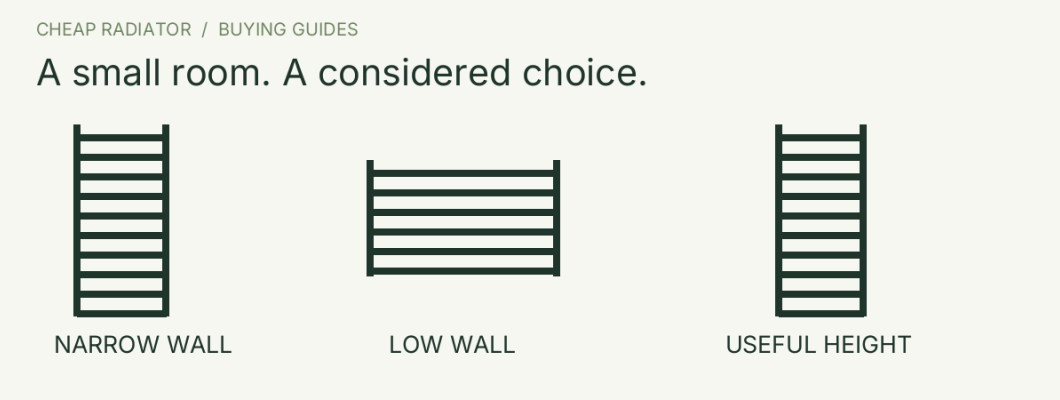
- A narrow rail can use a restricted wall beside a basin or doorway.
- A taller model may provide additional output within the same width, but check its exact rating and reachable towel space.
- A shorter, wider rail may work on a low wall where height is limited.
- A different emitter or additional heat source may be needed if a suitable towel rail cannot meet the room’s requirement.
Mark the outline and check doors, drawers, valves, towels and installed projection. Start with measuring width, height and projection rather than assuming a particular wall position always performs best.
Choose how the heating will run
A central-heating towel rail depends on the heating circuit. An electric arrangement can provide independent operation, while a compatible dual-fuel arrangement may offer seasonal flexibility. Compare the proposed products, controls and installation costs; none is automatically cheapest for every household.
Energy Saving Trust’s heating-controls guide explains how heating controls manage timing and temperature. For an electric or dual-fuel bathroom installation, follow Electrical Safety First’s bathroom guidance and use a registered electrician.
Allow for towels and ventilation
Check the gaps between bars and how your towels will hang. Covering the rail changes how heat reaches the room, so discuss normal towel use when checking whether it can be the only heater. Heating does not replace necessary ventilation.
Finish with a practical shortlist
Compare small and narrow rails and wider towel radiators that fit. Check output, connections, controls and included fittings before choosing chrome or black. Our small-bathroom buying guide brings those checks together.
Questions about small-bathroom heating
Practical answers to help with the choices covered in this guide.
Can a towel rail replace both a heater and towel storage?
It may do both when the chosen model has adequate output and a practical hanging layout. Check room heat loss separately from towel capacity, including how the rail will normally be covered.
Is a narrow radiator always best beside a small basin?
Only if the complete installation leaves comfortable access. Check projection, valve positions, hanging towels and the route through the room. A shorter, wider rail elsewhere may be a better fit.
Will a warm towel radiator solve bathroom condensation?
Heating does not replace ventilation. Keep the room’s required ventilation working and investigate persistent condensation or damp rather than relying on a warmer rail alone.