
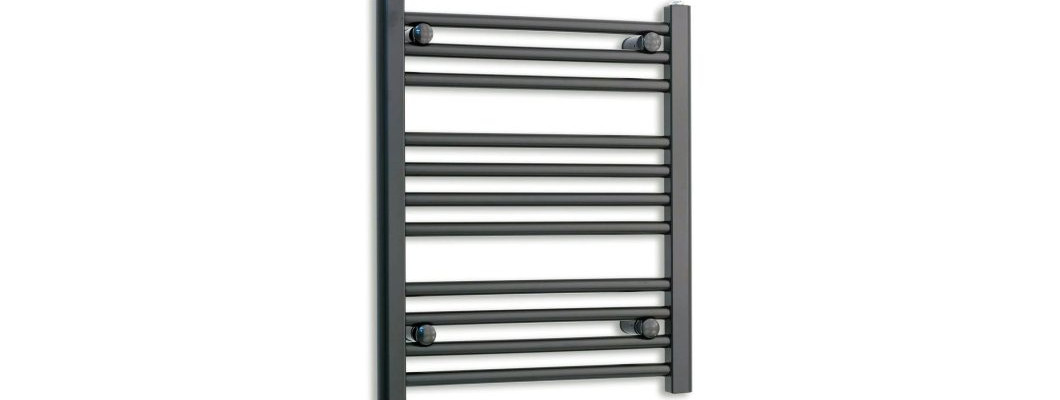
A towel radiator may be worth repairing if the fault is at a replaceable valve or joint and the body is sound. If water is coming from the body, corrosion is worsening or failures keep recurring, ask an engineer to assess replacement and check the condition of the heating system.
Compare the whole job
Ask the installer to identify the failed part and explain what might have caused it. Compare the cost of repairing it with the full replacement job, including valves, any pipe alterations, wall fixings and commissioning. Check your warranty and keep photographs and order details before authorising work.
Measure the replacement before ordering
Record the rail width and height, the centre-to-centre distance between the pipe connections, the direction the pipes approach and the space available around the valves. Check projection from the wall and clearances for doors or fittings. Confirm the new rail’s heat output at your system temperatures. If the old rail used an electrical element, confirm the replacement is approved for the required configuration with your installer.
Compare the manufacturer’s drawing with your pipe-centre measurements. Browse narrow towel radiators or wide towel radiators once the dimensions are clear.
Frequently asked questions
Can I use the old valves on a new towel radiator?
Ask your installer to check their condition and compatibility. The connection, geometry and valve clearance all need to suit the replacement.
Will another rail of the same width fit the existing pipes?
Overall width and pipe centres are different dimensions. Check the drawing and connection positions for the exact model.
For other symptoms, see the complete towel radiator troubleshooting guide.