
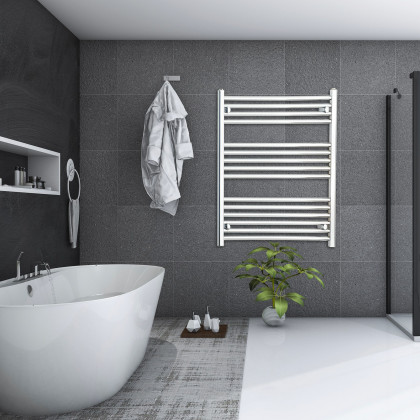
550mm Wide 800mm High Polished Chrome Flat Towel Radiator
- Size
- 550 × 800mm (W × H)
- Pipe centres
- 500mm
- Finish
- Chrome
- Listed output
- 1,558 BTU/h
Available to order
£76.99Inc. VATRadiator only · valves extra
View sizes & options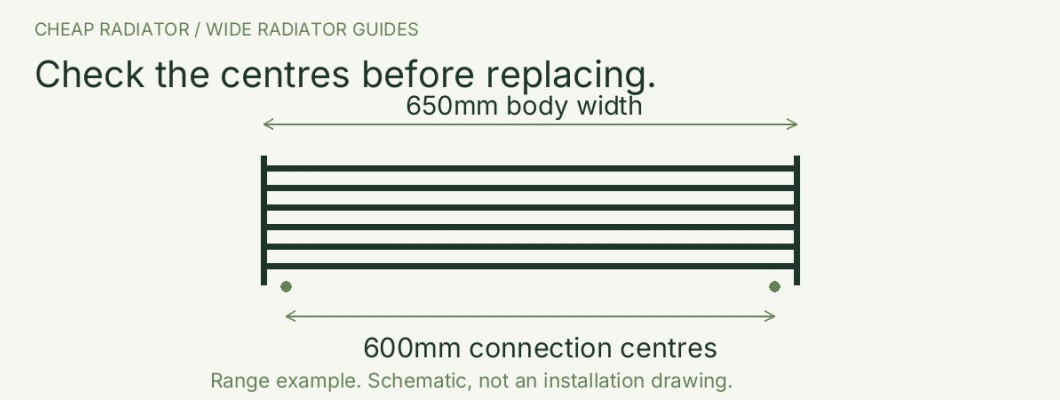
Quick answer: For a replacement wide towel radiator, measure connection centre lines, body dimensions and wall projection separately. Our ranges use pipe centres 50mm less than body width, but existing valve and pipe dimensions still need checking before a like-for-like replacement is confirmed.
Part of our wide towel radiator buying guide.
A replacement can look almost identical to the old towel radiator and still need plumbing changes. Overall width describes the body, while pipe centres describe the spacing of the connection centre lines. The valves link the radiator to the pipes and add their own dimensions to the installation.
Start with the wide towel radiator buying guide if you are still deciding on the general size. This checklist is for the next stage: deciding whether a shortlisted rail can replace the one already on the wall.
If a connection is concealed or the centre line is unclear, ask the installer to measure it. Do not loosen live plumbing merely to obtain a measurement.
In our towel radiator ranges, a 550mm body has 500mm pipe centres; a 650mm body has 600mm centres; and an 800mm body has 750mm centres. These refer to the selected rail’s connection spacing. They do not automatically establish the distance between your existing floor pipes after valves are fitted.
You can compare 550mm-wide black towel radiators, 650mm-wide black towel radiators and 800mm-wide black towel radiators, or use the complete 550mm to 800mm width table. Always check the individual product specification as the final reference.
Do not assume that matching width and height means matching bracket positions. Tube layout, bracket design and adjustment range can differ. Your installer should assess the wall, select suitable fixings and plan any redundant holes before fitting the replacement. Supplied brackets do not establish that the existing plugs or wall structure are suitable.
Take photographs before removing the old rail. Include a wide view of the wall and close views of the connections. Note any tiled surfaces, concealed services or furniture that limit access. This gives an installer a more useful starting point than a product name alone.
Possibly, if their connection type, condition and dimensions suit the new rail. Reuse is a compatibility decision, not a guaranteed saving. New straight or angled valves may change the required pipe arrangement. Our valve and clearance guide for wide rails explains the questions to ask.
If changing heating controls, Energy Saving Trust’s heating-controls guide explains the different roles of room thermostats and radiator valves. A manual valve is not the same as a thermostatic valve; ask your installer how the bathroom should be controlled within the whole system.
A rail that fits the old connections may still provide a different amount of heat. Compare the exact new model with the room’s requirement, especially after changes to the heating system, insulation or room layout. Our output and low-temperature guide covers the figures to request.
Give the installer the proposed product link, selected size, finish, connection spacing, valve choice and photographs. Ask them to confirm pipe alterations, bracket positions, wall suitability and heating performance before installation is booked. That short check is more reliable than ordering from body width alone and trying to make the rest fit afterwards.
Practical answers to help with the choices covered in this guide.
Not necessarily. Bracket design, tube layout and adjustment range can differ. Have the installer check fixing positions, wall condition and suitable support before relying on existing holes.
Possibly, if their condition, connections and assembled dimensions suit the new rail. Confirm this before ordering; reuse should not be assumed from matching finish or body width.
Take a full view of the old installation and close views of the valves, pipes and wall position. Include nearby furniture or screens, and identify the centre-lines used for your measurements.
External sources support the general heating or safety points identified above. Product dimensions, supplied fittings and range examples refer to Cheap Radiator’s listings; confirm the selected product before ordering. This is buying guidance, not an installation specification.
For the full fitting checklist, see the towel radiator valves and fittings guide. Browse wide towel radiators once you have confirmed the measurements and fittings for your installation.
Compare the new connection positions with the existing pipe entries. Ask your installer whether the necessary offsets can be made with accessible pipework, and whether pipe or bracket changes would leave holes or marks to repair. Check the available height, valve clearance and heat output at the same time.
For the full checklist, see our guide to replacing a bathroom radiator with a heated towel rail.
Explore chrome and black examples relevant to this guide, then check the exact size and listed heat output on the product page.
Available to order
£76.99Inc. VATRadiator only · valves extra
View sizes & options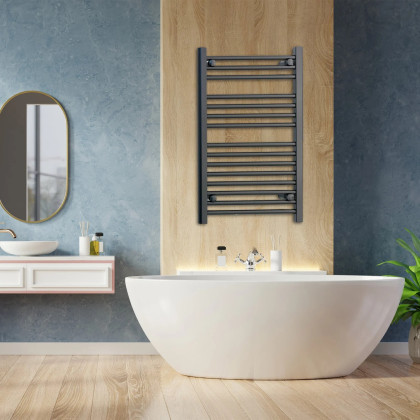
Available to order
£71.99Inc. VATRadiator only · valves extra
View sizes & options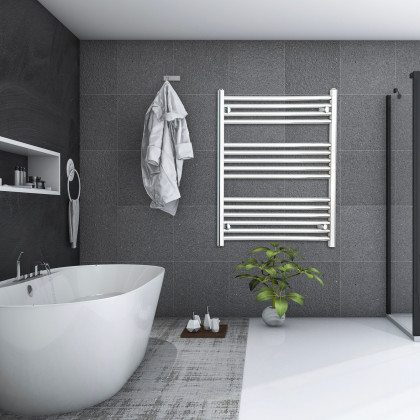
Available to order
£69.99Inc. VATRadiator only · valves extra
View sizes & options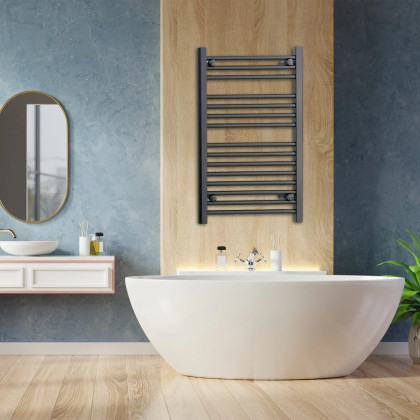
Available to order
£86.99Inc. VATRadiator only · valves extra
View sizes & optionsPrices and availability come from the current catalogue. Examples may differ in height and output. Check the exact model’s full specification, rating conditions and installation suitability before choosing.