
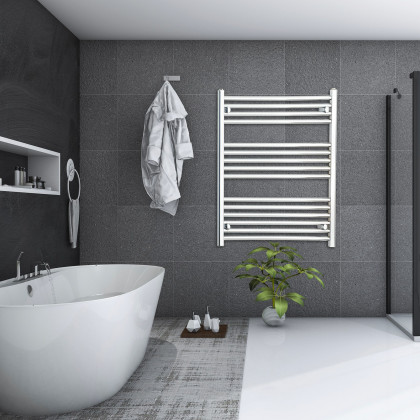
550mm Wide 800mm High Polished Chrome Flat Towel Radiator
- Size
- 550 × 800mm (W × H)
- Pipe centres
- 500mm
- Finish
- Chrome
- Listed output
- 1,558 BTU/h
Available to order
£76.99Inc. VATRadiator only · valves extra
View sizes & options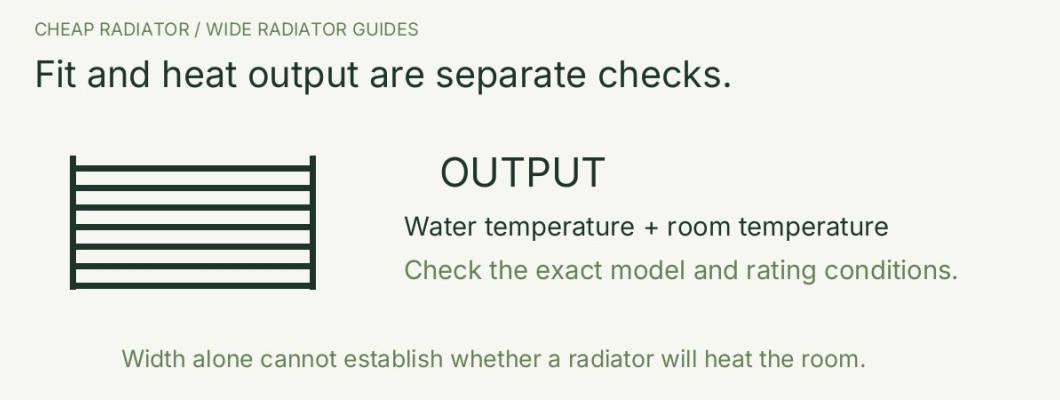
Quick answer: A wide towel radiator can heat a bathroom only if its output at the system’s operating conditions meets the room’s heat loss. Compare the exact model in watts or BTU/h and check the rating temperature difference. Width alone cannot confirm suitability, particularly with a heat pump.
Part of our wide towel radiator buying guide.
“Will it fit?” and “Will it heat the room?” need separate answers. A wide rail may make good use of a low wall, but its outline does not establish its heating capacity. A bathroom also loses heat through its walls, windows, ventilation and other surfaces; floor area alone cannot capture all those differences.
Use the wide towel radiator buying guide for the complete purchase checklist. Here, the aim is to compare output figures without confusing a size preference with a heating calculation.
The on-page BTU calculator is a starting estimate. For the final selection, ask a heating installer to assess the room and the intended indoor temperature. Tell them about external walls, glazing, insulation and whether the towel radiator will be the only heat emitter.
If underfloor heating or another radiator already serves the room, the towel rail may have a supporting role. Do not count the same heat contribution twice, or assume that existing heating always makes the towel rail’s output irrelevant. The system should be considered together.
Watts and BTU/h are different units for heat output. To compare a shortlist, use one unit throughout: 1 watt is approximately 3.412 BTU/h. For example, 500 watts is about 1,706 BTU/h. This is only a unit conversion; it is not a recommendation for a particular bathroom.
Keep an output figure attached to the exact width, height and finish. A number copied from another size in the range is not a sound basis for ordering. If the product information does not state the rating conditions, ask for confirmation before making a close comparison.
For radiator ratings, ΔT describes the difference between the mean water temperature and the room air temperature. As an illustration, flow water at 75°C and return water at 65°C give a mean of 70°C; in a 20°C room, that is ΔT50. These are example rating conditions, not operating instructions for your system.
A radiator’s output falls when that temperature difference falls. Do not simply halve a published output when the ΔT halves: use the model’s manufacturer-supplied correction data or an installer’s calculation. A generic percentage can give a misleading result.
CIBSE Journal’s technical discussion of radiator upgrades for heat pumps explains the relationship between flow, return and room temperatures and why actual operating conditions matter when sizing emitters.
Energy Saving Trust’s air source heat pump guidance notes that radiator upgrades may be needed. For a wide towel rail, ask for the expected output at your proposed flow, return and room temperatures, rather than relying solely on a headline catalogue figure.
A larger rail may be part of the solution, but it is not an automatic guarantee. Available wall space, hydraulic design and the rest of the heating system still matter. If suitable output cannot be achieved within the space, discuss another heat emitter or a different heating arrangement with your installer.
Hanging towels change the way the rail releases heat into the room. Do not assume that a heavily covered rail will deliver the same room-heating effect as an uncovered test arrangement. Think about whether the main priority is room warmth, towel warming or a combination.
A central-heating rail normally depends on the heating circuit running. If you want independent summer towel warming, explore a compatible electric or dual-fuel arrangement separately. Compatibility, element sizing and bathroom electrical installation must be confirmed for the exact products; width is not enough to choose an element.
Browse wide towel radiators after establishing the required output and rating conditions. Compare two or three exact models, then check their pipe centres and replacement fit. Avoid declaring a winner by black or chrome finish alone: our finish comparison explains why the actual model figures matter.
Practical answers to help with the choices covered in this guide.
No. The figure describes heat output under stated conditions. It does not establish lower bills or greater efficiency. Compare actual system temperatures and room requirements alongside the rating.
Do not use that shortcut. Radiator output does not follow a simple universal linear correction. Request the exact model’s approved correction data or an installer’s calculation.
Discuss another emitter or heating arrangement with the installer. An oversized-looking body cannot make up for a confirmed shortfall at the intended operating temperatures.
External sources support the general heating or safety points identified above. Product dimensions, supplied fittings and range examples refer to Cheap Radiator’s listings; confirm the selected product before ordering. This is buying guidance, not an installation specification.
If the rail is the only heat source, ask your heating engineer for the bathroom’s design heat loss. Compare it with the exact model’s output at your operating temperatures. If you use two rails, add their outputs at the same rating conditions. For towel capacity and placement as well as room heating, see our guide to choosing a wide heated towel rail for a large family bathroom.
Explore chrome and black examples relevant to this guide, then check the exact size and listed heat output on the product page.
Available to order
£76.99Inc. VATRadiator only · valves extra
View sizes & options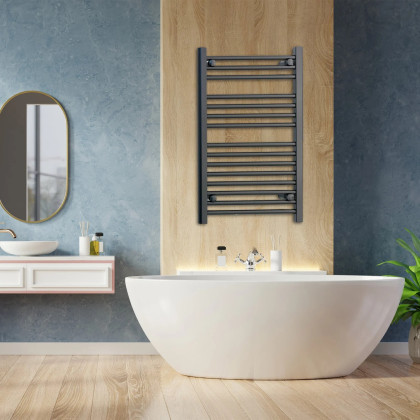
Available to order
£71.99Inc. VATRadiator only · valves extra
View sizes & options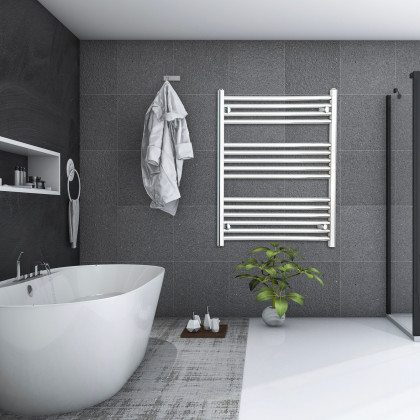
Available to order
£69.99Inc. VATRadiator only · valves extra
View sizes & options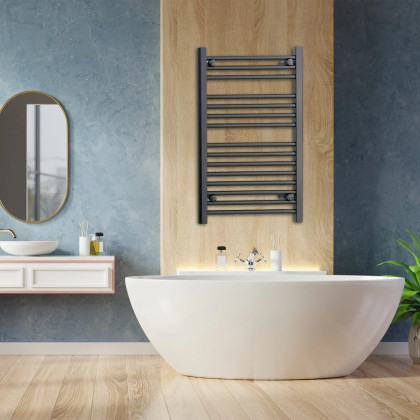
Available to order
£86.99Inc. VATRadiator only · valves extra
View sizes & optionsPrices and availability come from the current catalogue. Examples may differ in height and output. Check the exact model’s full specification, rating conditions and installation suitability before choosing.