
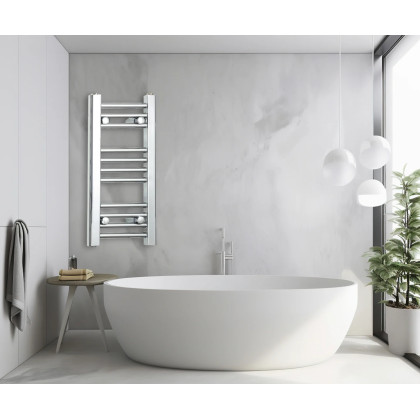
200mm Wide 600mm High Flat Chrome Towel Radiator
- Size
- 200 × 600mm (W × H)
- Pipe centres
- 150mm
- Finish
- Chrome
- Listed output
- 478 BTU/h · 140 W
Available to order
£51.99Inc. VATRadiator only · valves extra
View sizes & options
Part of our 200mm, 250mm and 300mm buying guides.
A narrow towel radiator can be fitted to a suitable plasterboard or stud wall when the wall structure and fixing system can support the complete installed load. Have the installer assess the board, supporting studs or noggins, radiator brackets and product instructions rather than assuming that the supplied plugs will suit the wall.
A 200mm-wide body can look light, but the installed load includes water, fittings and towels. It also projects away from the wall, so a fixing’s suitability cannot be judged from the empty radiator weight or the width of its face alone.
Find out whether the rail will be attached to timber or metal studwork, plasterboard bonded to masonry or another wall system, because the available fixing methods differ. The installer needs the board type and thickness, the supporting structure, proposed bracket positions and applicable fixing-load data before selecting and positioning any anchors.
Stud locations may not line up with the radiator brackets. On a new partition, suitable timber noggins or other designed backing can provide planned fixing points before the wall is boarded. On an existing wall, the installer should assess what is actually behind the surface rather than choosing anchors from the finish alone.
Use the radiator’s declared dry weight and water capacity, plus its fittings and realistic towel load, when checking the supporting structure and fixings. Water adds approximately one kilogram per litre, but weight alone does not resolve the fixing design because bracket spacing, projection and the manufacturer’s requirements also affect the installed arrangement.
Ask the supplier for any missing weight or capacity information rather than estimating it from the product photograph. A towel radiator is not a grab rail: do not plan to use it for body support, and consider whether children or other users could place unintended loads on it.
Heavy-duty hollow-wall or toggle-type anchors are possible options only where the fixing manufacturer’s data and the wall construction support the intended application. Do not rely on a generic “heavy-duty” label, divide a headline load rating by the number of brackets, or assume every fixing shares the load equally.
Mark the bracket positions from the exact radiator and its installation drawing, then check that those positions can be supported without forcing the pipework or compromising the wall. Confirm the intended bracket adjustment and finished-wall projection at the same stage, because access behind the rail and alignment with the valves matter as well as strength.
The checked 200mm range has 150mm radiator pipe centres; that measurement does not define the wall-bracket positions. Compare the finished room with the 200mm wall-space and valve-clearance guide and keep the selected radiator drawing available for the installer.
Check the condition of supplied brackets and retain the approved bracket arrangement. If a fixing position clashes with a stud edge, hidden service or tile joint, ask the installer how the wall support and layout should be resolved rather than omitting a bracket or moving it without approval.
The proposed drilling and fixing positions must be assessed for concealed cables, water pipes and other services before work starts, even where the visible wall looks clear. Coordinate the support positions with the valve and pipe routes so the installed radiator can be connected, adjusted and maintained without placing unwanted strain on the fittings.
Planning is easier before a wall is closed up, but photographs of unfinished work do not replace an assessment of the finished installation. Keep the controls accessible, allow for skirting and pipe boxing, and confirm that any decorative pipe covers and caps can be fitted without concealing a connection that needs access.
For an electric or dual-fuel installation, agree the radiator, heating element, fixing positions and electrical route with the professionals responsible for the complete arrangement. The electrician must assess the bathroom location and required protection under the applicable requirements; a plasterboard wall, matching thread or IP label alone does not confirm the installation is suitable.
Use the dual-fuel conversion checklist before buying separate elements or T-pieces, and read the bathroom electrical installation-planning guide for the questions to take to a registered electrician.
Before purchase, agree the exact rail and bracket drawing, wall construction, complete installed weight, suitable fixing system and the supporting positions with the installer. Keep a record of pipework and clearance checks as well, so a product chosen for its narrow body does not arrive before its practical installation has been resolved.
Return to the 200mm towel radiator buying guide to compare heights and outputs, then shortlist 200mm chrome rails or 200mm black rails. Check supplied and optional fittings against the selected product.
Huseyin Aras is a bathroom heating and product sourcing specialist with more than 18 years of hands-on experience. This planning guide brings together the product and installation questions customers should resolve with their supplier and installer before choosing a narrow towel radiator for a particular wall or bathroom.
The same structural assessment applies to a 250mm towel rail: its wall and brackets must support the installed water-filled weight, fittings and towels without relying on an unsuitable plasterboard plug. Check the actual bracket drawing and support positions before finalising the location, then keep sufficient room for operating and maintaining the valves.
Follow the 250mm towel radiator buying guide for the height table, 200mm connection centres and model-specific projection dimensions. Check the 250mm wall-space and valve-clearance guide alongside this article before deciding where the complete installation will fit.
Browse 250mm chrome towel radiators and 250mm matt black towel radiators; compare current heights, finishes and availability on the category pages. For fittings, see radiator valves and compatible accessories and pipe covers.
A suitable corner valve may reduce control protrusion in a particular wall-fed arrangement, but compare the exact drawing with straight and angled alternatives. Structural anchors or timber noggins do not resolve valve access or pipe alignment; confirm those separately with the installer.
For a 300mm radiator on a stud or plasterboard wall, establish the filled load and approved bracket positions before choosing studs, noggins or a suitable cavity-fixing system. Its 250mm bottom connection centres are a plumbing dimension rather than a wall-fixing measurement, and the valve footprint still needs clearance from furniture and door movement.
Start with the 300mm towel radiator size, centres and buying guide and 300mm wall-space and valve-clearance checklist. Then compare the related sizing and heating checks.
Compare the current 300mm chrome towel radiators and 300mm matt black towel radiators. For the complete fitted arrangement, browse radiator valves and pipe covers, reducers and other accessories.
Compare live 200mm-wide chrome examples in 600, 800 and 1000mm heights, then check the selected options and exact installation requirements.
Available to order
£51.99Inc. VATRadiator only · valves extra
View sizes & options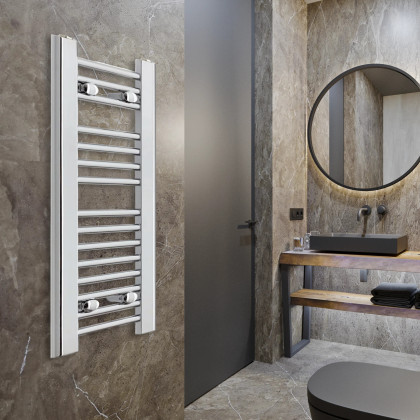
Available to order
£54.99Inc. VATRadiator only · valves extra
View sizes & options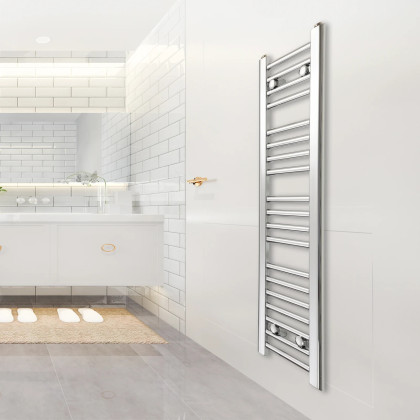
Available to order
£56.99Inc. VATRadiator only · valves extra
View sizes & optionsPrices and availability come from the current catalogue. Examples may differ in height and output. Check the exact model’s full specification, rating conditions and installation suitability before choosing.